


Find Out How Weight Calibration Ensures Measurement Accuracy, Regulatory Compliance, and Long-Term Reliability
Accurate measurement is critical to quality, compliance, and operational efficiency. But over time, even precision calibration weights can change.
Contamination, handling, and environmental conditions can introduce small shifts, often without visible signs. Those changes can lead to inconsistent results, compliance risks, and costly process errors.
Without routine calibration, measurement drift can go unnoticed and directly impact product quality, safety, and regulatory outcomes.
Weight calibration helps detect these issues early and ensures your measurements remain accurate, traceable, and reliable.
Troemner's ISO/IEC 17025 accredited calibration services provide the precision, traceability, and confidence required for demanding applications across industries.
What Is Weight Calibration?
Weight calibration is the process of comparing a weight or weighing instrument to a known reference standard to verify its accuracy and ensure it remains within tolerance.
This process ensures measurements are:
- Accurate
- Traceable
- Suitable for regulated and quality-critical applications
Over time, normal use and environmental conditions can affect performance. Calibration ensures measurement systems continue to operate as intended.
But understanding what calibration is only matters if you understand the risks of not doing it.
Why Is Weight Calibration Important?
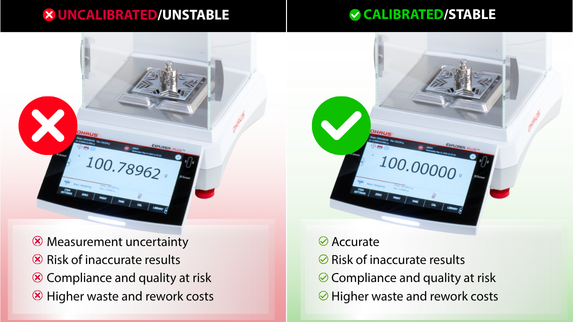
Weight calibration is important because even small measurement errors can create significant operational and compliance risk.
Without regular calibration, weights and instruments can drift out of tolerance, leading to inaccurate results, product issues, and unnecessary cost.
For organizations operating in regulated or precision-driven environments, calibration is not optional. It is required to maintain control and minimize risk.
Key Benefits of Weight Calibration
- Ensures accuracy of weights, balances, and scales
- Supports compliance with ANSI/ASTM E617, OIML R111, ISO/IEC 17025, and traceability requirements
- Reduces measurement uncertainty and improves confidence in results
- Improves safety in regulated and safety-critical environments
- Reduces waste and cost by preventing overfilling, underfilling, product loss, and rework
- Maintains reliability across processes and equipment
Accurate measurements protect product quality, process consistency, and customer confidence. Organizations rely on accredited calibration providers, such as Troemner, whose metrology expertise, advanced automation, and rigorous accreditations help maintain accuracy, traceability, and confidence in critical measurement processes.
But what actually causes calibration weights to drift over time?
Why Do Calibration Weights Drift Over Time?
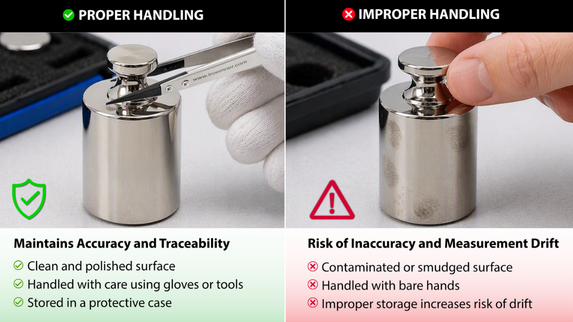
Calibration weights can change over time due to handling, contamination, environmental influences, and normal wear.
Common causes include:
- Surface contamination from dust, oils, or residues
- Improper handling practices
- Wear from repeated use
- Temperature and humidity fluctuations
- Corrosion or oxidation
Even microscopic changes can affect performance and push a weight outside its specified tolerance.
Regular calibration helps detect these changes before they affect operations.
Once drift occurs, calibration becomes the only way to verify and correct it.
How Does Weight Calibration Work?
Weight calibration is performed under controlled laboratory conditions to verify accuracy, determine measurement uncertainty, and maintain traceability.
Step 1: Select the Appropriate Reference Standard
Standards are chosen based on the required precision and application.
Step 2: Perform Calibration Under Controlled Conditions
Environmental factors such as temperature, humidity, vibration, and airflow are controlled to minimize variability.
Step 3: Compare Measurements and Evaluate Results
The test weight is compared to a recognized reference standard to confirm it remains within acceptable tolerances. If deviations are found, corrective actions can be taken.
Because calibration results are only as reliable as the standards behind them, adherence to internationally recognized requirements is essential. Troemner's metrology expertise and deep understanding of these rigorous standards help support accurate, traceable, and reliable measurement results through its ISO/IEC 17025 accredited weight calibration services.
What Standards Apply to Weight Calibration?
Weight calibration supports compliance with recognized national and international standards that ensure accuracy and traceability.
Common standards include:
- ANSI/ASTM E617
- OIML R111
- ISO/IEC 17025
- NIST traceability
These standards ensure measurement systems are consistent, reliable, and audit-ready.
Which Industries Require Weight Calibration?

Any industry that depends on accurate measurement benefits from routine weight calibration.
- Pharmaceuticals: formulation accuracy, dosage verification, compliance
- Food and beverage: labeling accuracy, consistency, quality control
- Agriculture: accurate measurements for equipment and production
- Manufacturing: process consistency and product quality
- Logistics and warehousing: shipping accuracy and inventory control
- Testing and research laboratories: analytical precision
In each of these environments, inaccurate measurement introduces risk. Calibration helps maintain control.
What Are the Best Practices for Weight Calibration?
Proper handling, environmental control, documentation, and routine calibration help preserve accuracy between calibration intervals.
- Use the correct weight class for the application
- Handle weights using gloves or approved tools
- Maintain clean and stable environments
- Document calibration results and conditions
- Establish routine calibration schedules based on usage and requirements
If your process depends on accurate measurement, evaluating your calibration approach is essential to improving consistency and reducing risk. Learn how Troemner's ISO/IEC 17025 accredited weight calibration services can help support measurement accuracy, traceability, and compliance.
What Common Weight Calibration Mistakes Should You Avoid?
Avoid practices that compromise accuracy and traceability:
- Using weights that do not match application requirements
- Handling weights with bare hands
- Ignoring environmental influences
- Failing to document calibration activities
- Delaying recalibration after repair or relocation
- Extending calibration intervals beyond recommended schedules
Calibration should be part of an ongoing quality program rather than a one-time activity.
Why Choose Troemner for Weight Calibration Services?
Troemner provides ISO/IEC 17025 accredited weight calibration services supported by experienced metrology professionals, advanced technology, and more than 180 years of expertise.
Troemner capabilities include:
- ISO/IEC 17025 accredited calibration services
- NVLAP Laboratory Code 105013-0
- NIST-certified metrologists and trained technicians
- Low measurement uncertainty
- Calibration services supporting ASTM and OIML requirements
- Calibration certificates designed for traceability and compliance
- Calibration capabilities from 0.05 mg to 1,000 kg
- More than 4,000 precision weight calibrations performed daily
- Advanced mass comparator robotics
- Fast turnaround, with weights returned in as few as 8 calendar days
Troemner's calibration laboratories are engineered to maintain stable environments for precise and reliable measurements.
Key Takeaways About Weight Calibration
- Calibration verifies measurement accuracy and reliability
- Measurement drift occurs over time due to use and environment
- Compliance requires traceability to recognized standards
- Routine calibration reduces risk, cost, and uncertainty
- Troemner's accredited calibration services deliver reliable and defensible results
Frequently Asked Questions About Weight Calibration
What is weight calibration?
Weight calibration is the process of verifying a weight's accuracy by comparing it to a recognized reference standard.
Why is weight calibration important?
It ensures measurement accuracy, supports compliance, and protects product quality.
Why do calibration weights drift?
They drift due to handling, contamination, wear, and environmental conditions.
How often should weights be calibrated?
Frequency depends on usage, environmental conditions, and regulatory requirements.
Protect Measurement Confidence with Troemner
Accurate measurement requires ongoing calibration, proper handling, and controlled conditions.
Troemner's ISO/IEC 17025 accredited weight calibration services help organizations maintain accuracy, reduce operational risk, and stay compliant in demanding environments.
If your process depends on precise weight measurement, understanding calibration is the first step.
Contact Troemner to learn how our calibration services can support your measurement process.